

20 May Participatory Piangüa Monitoring in Bahía Málaga: a community conservation strategy – Raíces Piangüeras

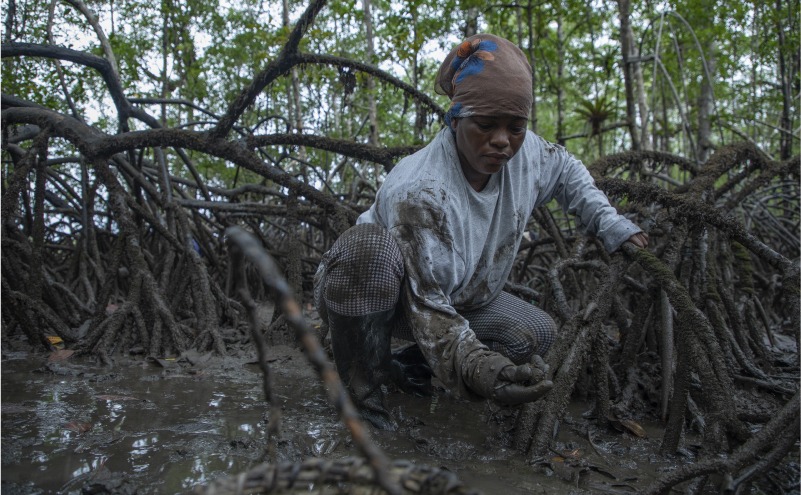
Cover photo: Piangüera woman during her harvesting journey | by: La Rotativa, 2024.
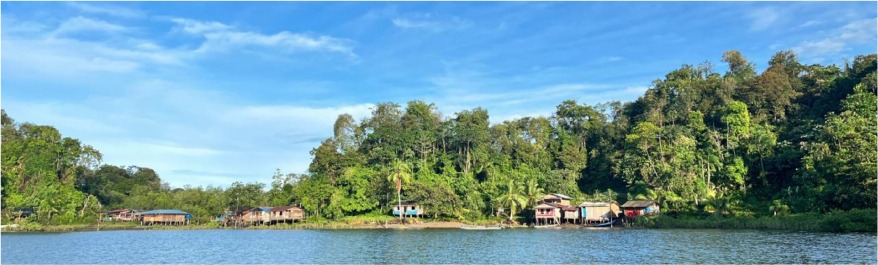
The Community Council of the Afro-descendant community of La Plata – located in Bahía Málaga, Buenaventura, Valle del Cauca, in the Colombian Pacific – carries out traditional subsistence activities such as fishing, piangua (mangrove clam) harvesting, agriculture, hunting, and cultural tourism as a new economic alternative. Each of these activities is practiced sustainably, ensuring the conservation of natural ecosystems.
In 2003, the Internal Regulations Code and the Rules for the Use and Management of Natural Resources of the Ancestral Territory of the Black Communities of the La Plata Community Council were established. This instrument aims to organize and plan the territory according to their mission: “We, the Black communities of the Ensenada of Málaga plan and commit to maintaining a territory where actions involving the use and management of the environment are balanced and guided by the premise of collective well-being for present and future generations. An ethnic community where health, education, food self-sufficiency, and peaceful coexistence are governed by the respect and ongoing appreciation of the cultural and environmental richness that defines us” (The Black Communities of Ensenada of Málaga, 2003).
Through territorial governance actions, appropriate spaces have been created for community organizations to develop strategies focused on the environmental sustainability of natural ecosystems. These efforts seek to face challenges associated with the climate crisis and coastal erosion. In this context, it is fundamental to highlight the work of the Community Association of Piangüa-Gathering Women of Bahía Málaga (Raíces Piangüeras), led by a group of women dedicated to the harvesting of the piangua mollusk. This organization, composed of 28 members and founded in 2019, has the objective of strengthening the conservation and transmission of traditional knowledge and practices related to piangua harvesting, as well as the ecological preservation of the species and its habitat. Their work is carried out through social, cultural, environmental, and economic activities at the local, regional, and national levels.
The environmental monitoring of piangüa and mangroves implemented by Raíces Piangüeras has consolidated as a successful strategy, achieving a team integrated by 12 piangüa-gathering women who lead a comprehensive conservation plan. This plan includes different strategies such as allowing mangrove areas to rest for natural regeneration, restoring the piangüa mollusk population, collecting data on mollusk harvesting, and monitoring and controlling the mangroves and their islands. Moreover, awareness-raising processes are carried out to highlight the importance of preserving these ecosystems in order to ensure the sustainability of life.
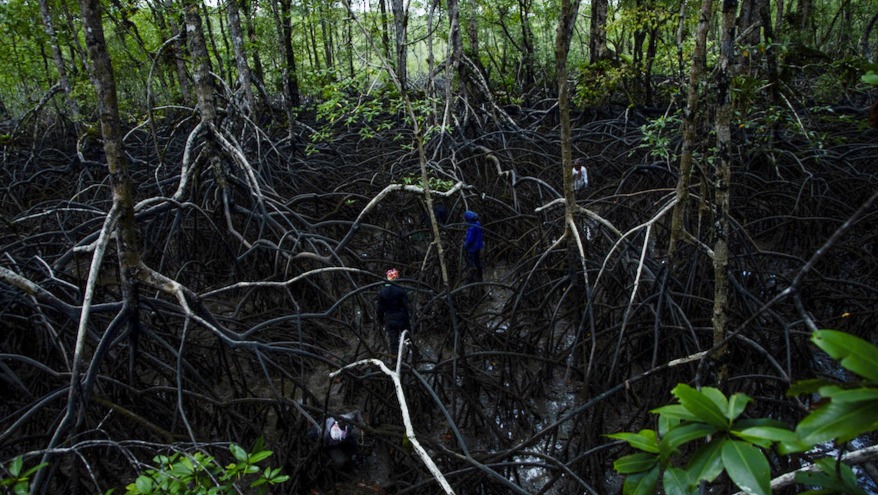
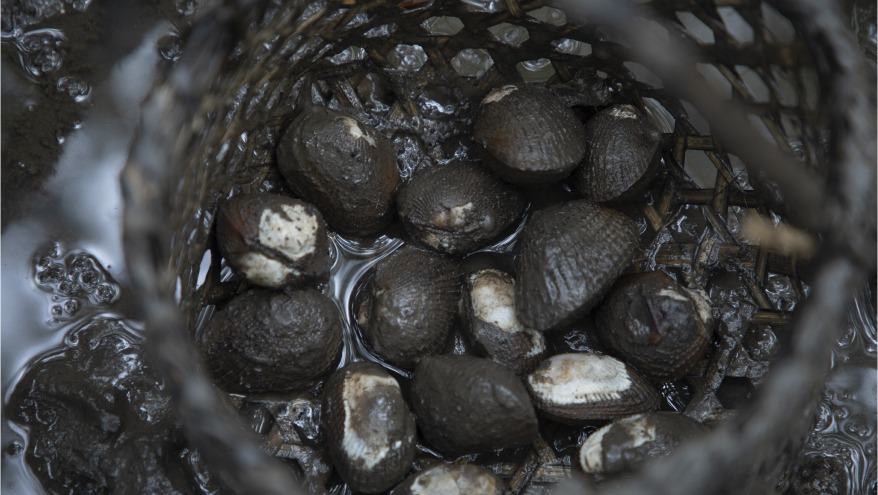
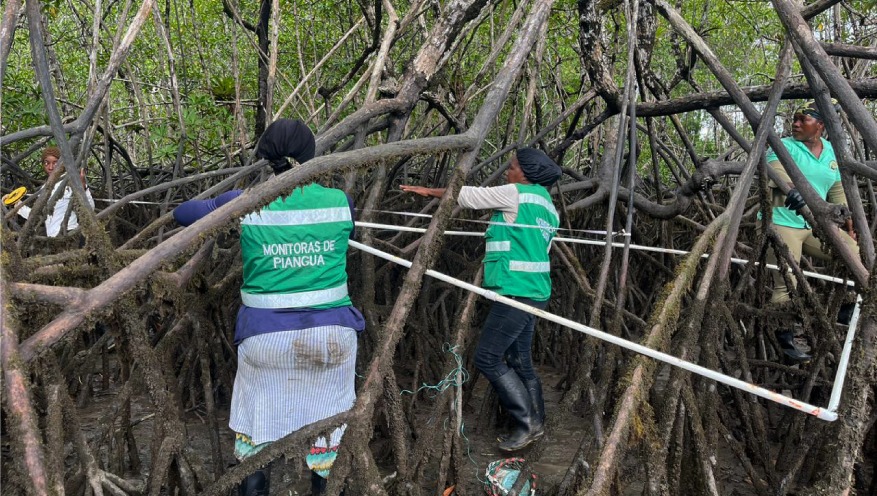
Photos taken by Matilde Mosquera Murillo
Since 2020, Raices Piangüeras has promoted training processes for its team of women mangrove monitors, in synergy with the Community Council and with the support of environmental institutions such as the National Authority for Aquaculture and Fisheries (AUNAP), the Regional Autonomous Corporation of Valle del Cauca (CVC), and organizations like Conservation International (CI), among others. As a result, this strategy has allowed the identification of the following specific areas that must be addressed to strengthen territorial management:
1. Develop a comprehensive plan in collaboration with environmental institutions and organizations to ensure community participation in projects and initiatives aimed at conserving these ecosystems.
2. Implement alternatives such as tourism and payment for environmental services from a cultural perspective for the mitigation of the impact of human activities.
3. Empower all stakeholders: support institutions in adopting traditional and cultural practices, and strengthen the technical capacities of community members to develop initiatives for the conservation of natural ecosystems. The aim is to bring together diverse forms of knowledge to establish Nature-based Solutions.


No Comments