

30 May Nature-Based Solutions for the Amphibious Habitat in the Community of Bocas del Atrato, Turbo, Antioquia

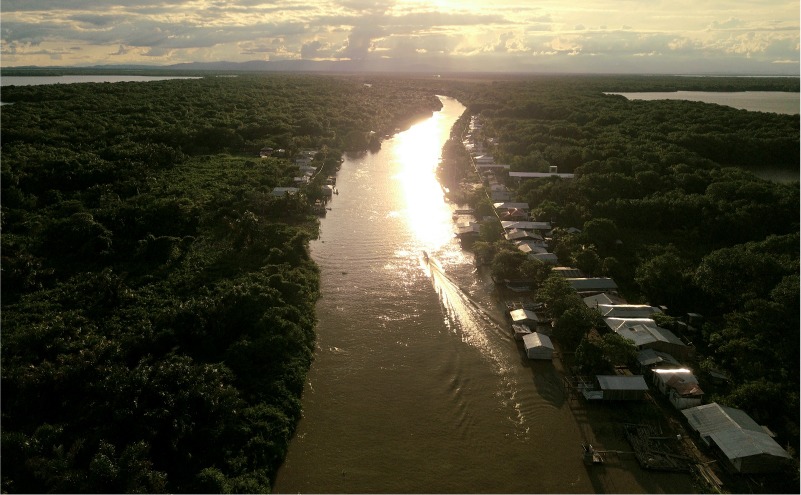
Cover photo: Aerial photograph of Bocas del Atrato | by: Juan Pablo Ramírez Coronado.
The term “amphibious habitat” refers to an ecosystem where communities coexist between land and water. Orlando Fals Borda introduced this concept in the 1970s to describe settlements along water bodies that face intermittent flooding and drought. In the 1990s, architect Gilma Mosquera and anthropologist Jacques Aprile-Gniset conducted research along the Pacific coast. Later, Mosquera -in collaboration with architect Ángela María Franco- updated this work in the chapter “The Value of the Collective: Traditional Architecture and Urbanism in the Pacific” from the book Housing and Culture (2022), which illustrates the living patterns and Afro-descendant material heritage of these communities.
Bocas del Atrato (Figure 1) is a village in the municipality of Turbo, Antioquia, located in the Gulf of Urabá. Between 2021 and 2023, research on the region’s material culture was conducted by the Architecture Faculties of the Universidad Santo Tomás in Medellín and Bucaramanga. The study referenced “Colombia Completa” by Carrizosa (2014), which explores knowledge, pleasure, and creativity in relation to the Atrato River—a hydrological bridge between the Pacific Ocean and the Caribbean Sea, as described by the Alexander von Humboldt Institute in “Colombia Anfibia” (2015).
The “Transformative Actions” methodology focused on participatory fieldwork with the community, employing applied conceptual research to develop architectural projects and urban planning strategies. The process involved five stages:
- Building Connections: Establishing dialogue among public administrators, community representatives (via the Community Council), and academia to coordinate joint activities.
- Co-Creation: An exploratory phase using cartography and pictograms to facilitate territorial understanding. The “Life of the Village” workshop engaged children, adolescents, and adults in reflecting on the past, present, and future of their waterway through drawings and discussions.
- Multiscale Validation: Evaluating workshop proposals by integrating researchers’ expertise and the project matrix from Turbo’s Territorial Development Plan (PDET).
- Participatory Design: LECOM (Community Lego) (Figure 2): Collaborative model-building with researchers and the “Practices at the Water’s Edge” group, resulting in three small-scale prototypes called “Water Science Stations.”
- The Outcome: Consolidation of results, detailed below.
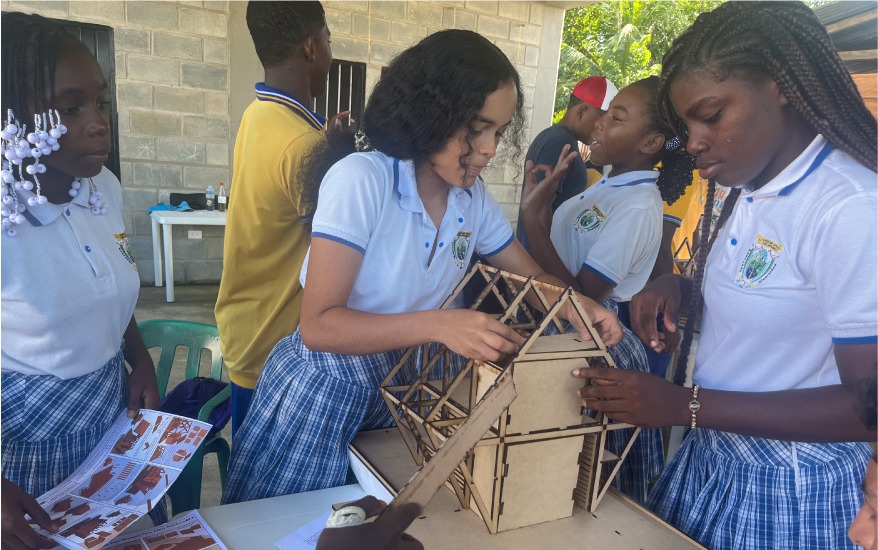
Figure 2. LECOM workshop in the community of Bocas del Atrato | Photo by: Luis Enrique Arciniegas Vega.
Six Nature-Based Solutions emerged as housing strategies:
- Use of Alternative Energy – Due to the lack of a conventional power grid in Bocas del Atrato, solar panels are necessary.
- Self-Construction – Promotes community involvement in building homes, leveraging local labor and ancestral knowledge with expert assistance.
- Leveraging the Diversity of the Inhabited Landscape – Encourages entrepreneurship based on local biodiversity, generating additional income and supporting conservation efforts.
- Rainwater Collection – Implements storage tanks to ensure access to potable water, a common practice in rural communities.
- Adapted and Adaptable Structures (Figure 3) – Considering the fluctuating water levels in amphibious ecosystems, structures should be built on stilts or floating platforms using durable, safe materials.
- Use of Dry Toilets – Prevents water source contamination, given the lack of sewage systems and the impracticality of conventional sanitation infrastructure.
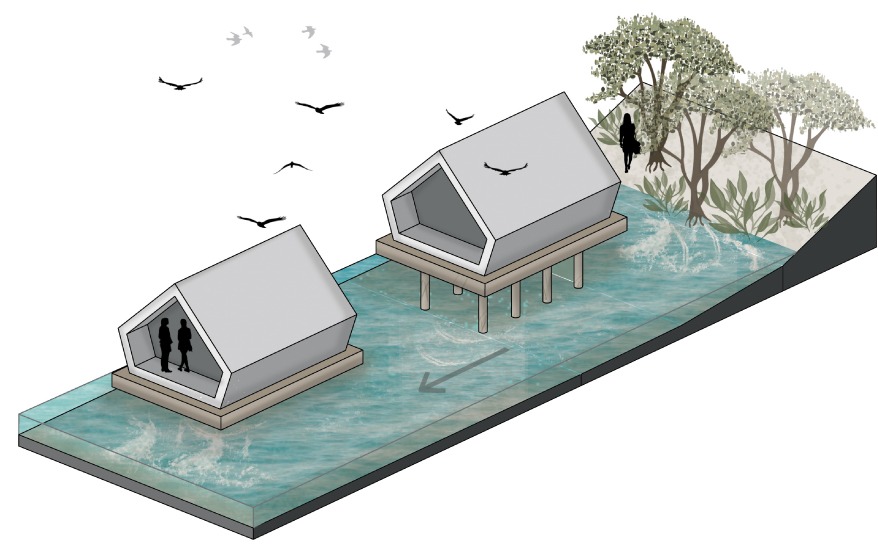
Figure 3. Design of adapted and adaptable structures. | Illustration by: Carmen Yuriany Pedroza Valdes.
In conclusion, the amphibious habitat’s multi-scalarity is highlighted, encompassing daily practices, river mobility, and spaces for protection and sustenance in Bahía Maritza near the district. This study contributes to the documentation of the sociocultural construction of these communities’ ancestral heritage, emphasizing their adaptability and relationship with the natural environment.


No Comments