

09 Jun Marine Nature-Based Solutions for Well-being in Caribbean Islands

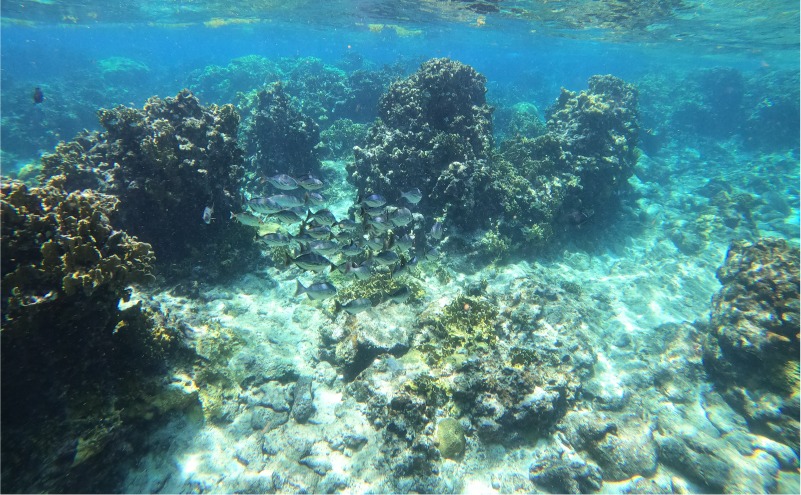
Cover photo: Coral reef in San Andrés, Colombia. | by: Julián Prato Valderrama
Around the world, island territories and their populations -particularly in the Great Caribbean Region- are highly dependent on the benefits that nature provides for their well-being. These benefits include seafood provision, climate regulation, water purification, oxygen production, coastal protection and breathtaking seascapes with turquoise blue waters that attract thousands of tourists from across the globe. Collectively, these benefits are known as “Marine Ecosystem Services” (MaES). MaES are essential for food security, economic stability and overall human well-being.
Marine ecosystems such as mangroves, seagrasses, the deep ocean, the open ocean, beaches and coral reefs, are the natural basis for biodiversity and human livelihoods. This is particularly critical for island territories, which are surrounded by the ocean and often located hundreds of kilometers away from the mainland, making access to food, medicine, transportation, and essential services more challenging. Additionally, when facing extreme events like hurricanes, flooding, droughts and food shortages, it could probably be easier to move across a continent by roads, planes, etc, to look for refugees or solutions to those events, than into an oceanic remote island. Climate change and population growth have posed critical challenges for coastal and island territories, people’s well-being and for marine ecosystems such as coral reefs, mangroves, and seagrasses, with increasing sea temperatures, sea level rise, hurricane and storms frequency and intensity (IPCC, 2021; Mycoo et al., 2022; Prato et al., 2024a). By recognizing these facts, it is easy to realize that people on small islands are heavily dependent on marine ecosystems and MaES.
Researchers worldwide have recognized the crucial role of marine ecosystems like coral reefs and mangroves in providing natural solutions and adaptation strategies for climate change resilience, by enhancing capabilities for coastal protection against extreme high waves and winds during hurricanes (Ferraio et al., 2014), resilience facing sea-level rise or providing refugee for fish and seafood, with key ecosystems becoming Nature-based Solutions (NbS).
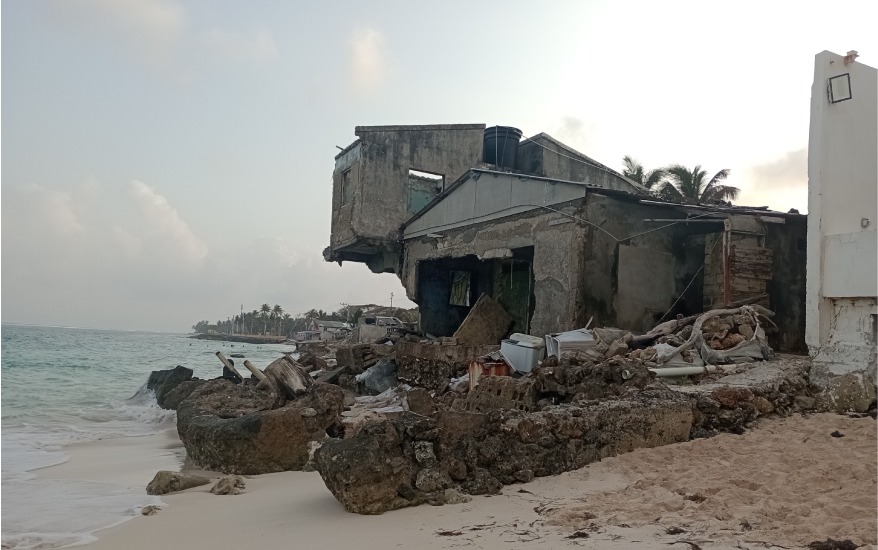
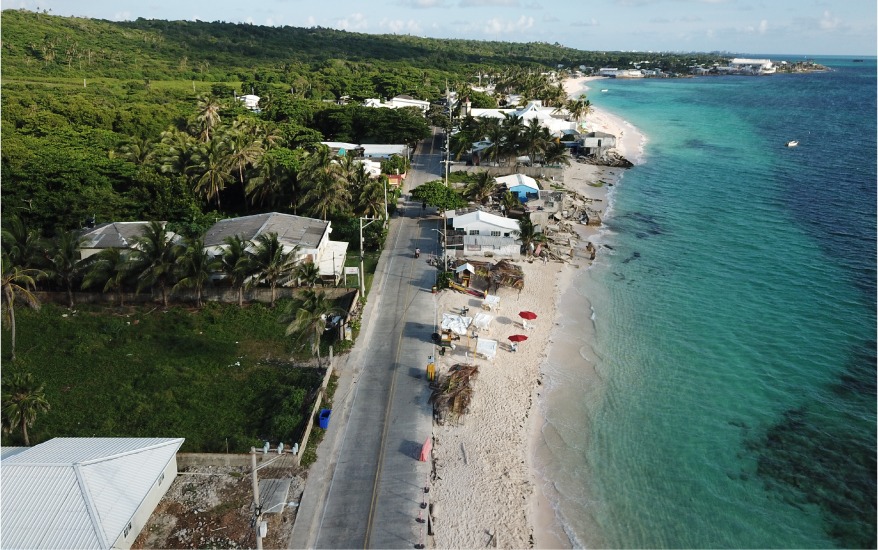
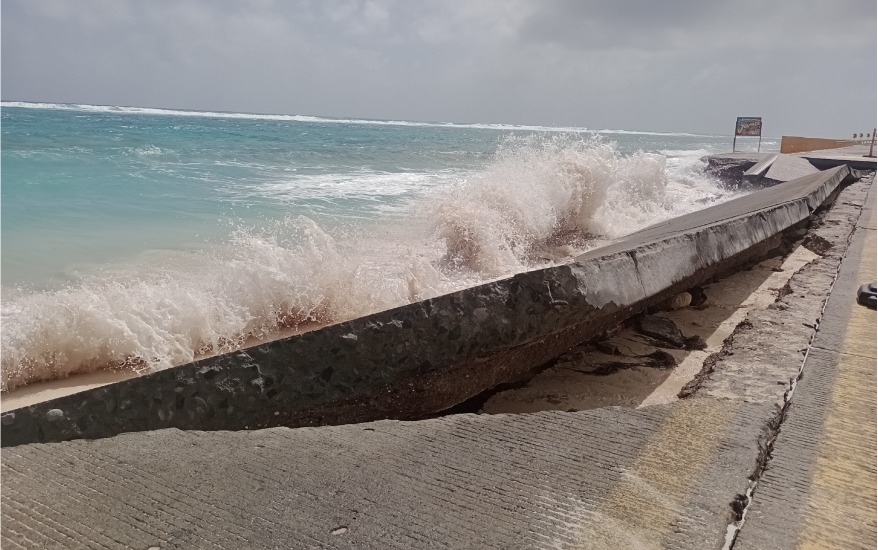
Effects of coral barrier reef´s deterioration in Sound Bay, San Andrés, Colombia. | By: Julian Prato Valderrama.
A recent study conducted on San Andrés Island, an oceanic island in the Western Caribbean, part of the nine islands and 180.000 km2 of the Seaflower Biosphere Reserve, Colombia, showed clear examples of key MaES for people’s well-being in Caribbean insular territories and showed how healthy coral reefs could become NbS for the island’s resilience and well-being. The research project “Relationships between coral reef complexity and ecosystem services at Caribbean oceanic islands, Seaflower Biosphere Reserve, Colombia”, examined the relationship between coral reef complexity and its related ability to provide ecosystem services such as fish refuge, coastal protection, ecological facilitation and tourism, with results that encourage investment in coral reef barriers restoration and protection as integral components of island natural infrastructure and as a key NbS with multiple benefits for the island.
The study revealed that higher structural complexity of reefs provides increased refuge for fish, leading to higher fish biomass, diversity and abundance, with biomass values increased up to six times in sites with higher complexity. This suggests that healthier reefs could provide more fish for food security and biodiversity. Additionally, field measurements showed that San Andrés’ coral barrier reefs play a crucial role in protecting coastlines by reducing wave heights by up to 90%, which could be hugely important for protecting the island and the safety of the population during hurricanes. However, coral degradation and reef flattening threatens this function, reducing wave attenuation to less than 50% as we found at the Sound Bay area, with negative erosion consequences observed as the main road breaking, the Raizal people’s houses damaged and destroyed, and critical beach erosion (Prato, 2024b).
Economic valuation methods were also performed, and results showed that healthy barrier reefs can stimulate tourism by sheltering wider beaches with calmer wave conditions and better fish and coral aesthetic scenarios. This stimulates the willingness of tourists to pay to visit and contribute to protecting San Andrés’s coral reefs. In this way, it was determined that visitors could contribute millions of dollars, a figure that could reach up to $1,985,214 USD/year that could be invested in coral reef management and protection. These findings underscore the importance of preserving coral reefs for coastal protection, marine biodiversity, and economic prosperity, as well as motivating the wise decision of investing in effective restoration strategies for healthier reefs as a NbS alternative for the island (Prato, 2024b).
Although mangroves are widely recognized for their capacity to protect coasts against waves and winds, this has not usually been considered by policymakers and society as part of the natural infrastructure of coastal territories, leading to mangrove forest decline for the sake of urban and touristic “development”. To highlight the importance of mangroves for reducing wind-speed, we conducted field measurements (including a high-speed winds season during Hurricane Iota in November 2020), we found that one mangrove tree can reduce wind speeds by 70% on average, and projections suggest that mangroves can reduce wind speed maintaining non-damaging conditions even under a category 2 hurricane (Prato et al., 2020).
These findings encourage stakeholders to protect and restore coral reefs and mangroves at island territories as a NbS and Ecosystem-Based Adaptation mechanism to build a more resilient present and future for Caribbean insular and coastal territories.


Alfredo Valderrama Vivas
Posted at 09:56h, 28 JuneEstupendo análisis de la relación entre manglares, arrecifes, humanos residentes y turistas. Salud!
Norma Janitza Valderrama
Posted at 15:26h, 28 JuneExcelente exposición de nuestra realidad marina y de soluciones a ella.
Éxito en la expansión de éste articulo y su propósito.
Nataly Díaz Cruz
Posted at 15:37h, 28 JuneEs fundamental tener inversión pública en la recuperación de manglares y arrecifes de coral para ciudades costeras. Gracias por difundir la investigación Julian.