

17 May Desalination and Environmental Monitoring: Strategies for Water Sustainability in San Andrés

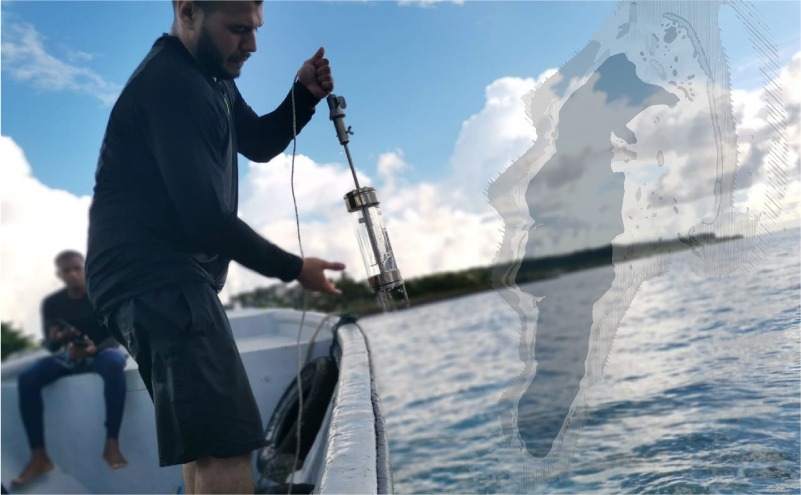
Cover photo: Water sampling in San Andrés, Colombia | by: CEMarin research team
The archipelago of San Andrés, Providencia, and Santa Catalina is an island territory with unique biodiversity, facing significant sustainability challenges—particularly in managing its water resources. The growing population and high tourist influx have placed immense pressure on the region’s aquifers, which serve as the primary source of drinking water. In response, the Environmental Corporation CORALINA, in partnership with CEMarin, has launched an innovative project centered on seawater desalination and environmental monitoring to ensure a sustainable water supply. Additionally, the project explores the potential of seawater for alternative energy generation through a system integrated with the desalination process (Coralina, 2023a).
Climate change and human activity have disrupted the archipelago’s natural conditions, affecting its highly vulnerable marine and terrestrial ecosystems, which are susceptible to extreme weather events and variable rainfall patterns. To address these challenges, the project has implemented environmental monitoring campaigns to assess water quality and other critical parameters. These efforts include collecting seawater samples to analyze chemical and biological composition, helping detect changes in aquatic ecosystem health and anticipate human-induced impacts (Coralina, 2023b). The monitoring focuses on hydrogeological, climatological, and oceanographic variables, providing deeper insights into the archipelago’s water dynamics. This data is essential for designing conservation strategies and water resource management approaches aligned with Nature-Based Solutions (NbS).
A key component of the project is the development of a seawater desalination prototype coupled with an alternative energy production system. This initiative aims to harness seawater for a sustainable drinking water supply, reducing reliance on aquifers with limited recharge capacity. Designed by CEMarin researchers from the Universidad Nacional de Colombia and the Universidad Jorge Tadeo Lozano, the prototype operates on clean energy, minimizing the environmental footprint of desalination. The system will evaluate the feasibility of large-scale implementation, benefiting local communities currently facing water scarcity and dependence on limited distribution or purchased water.
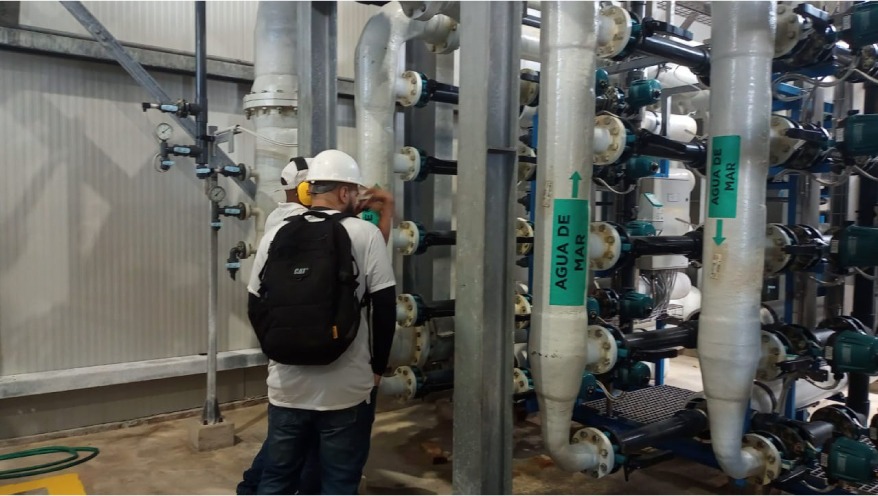
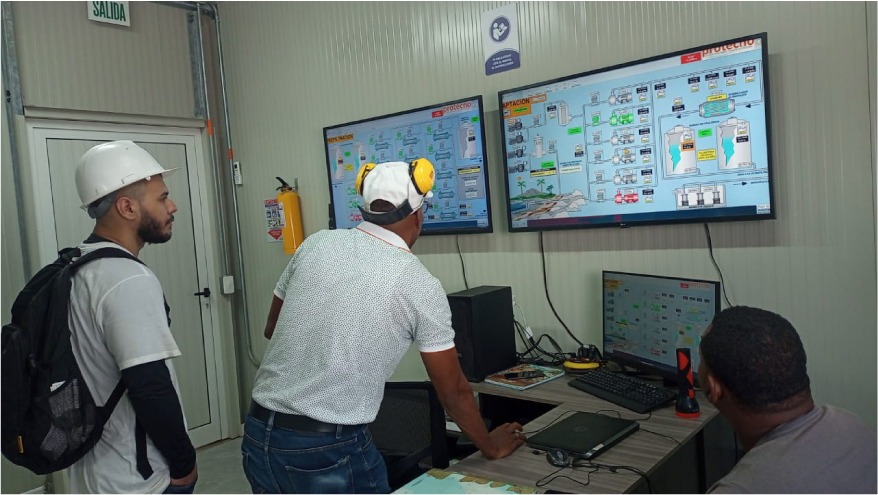
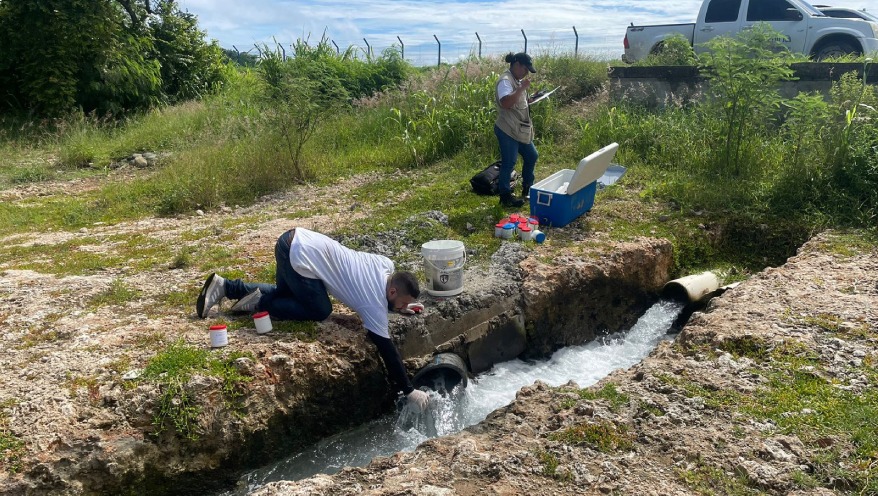
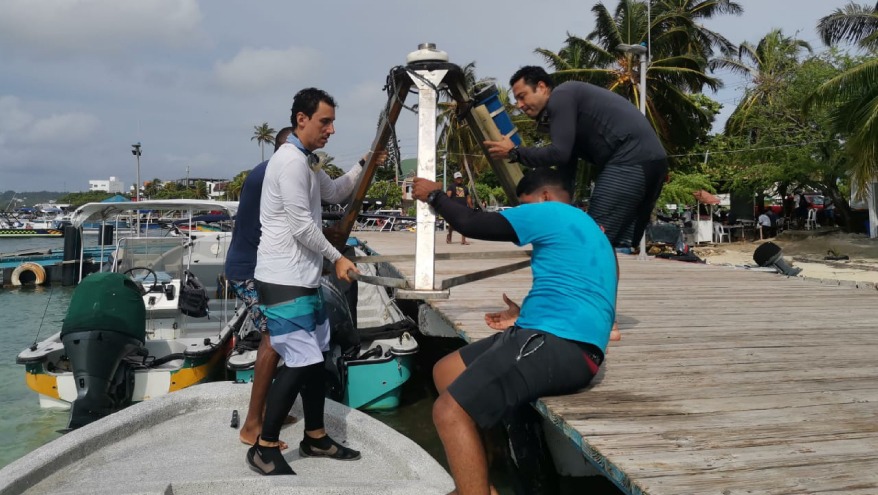
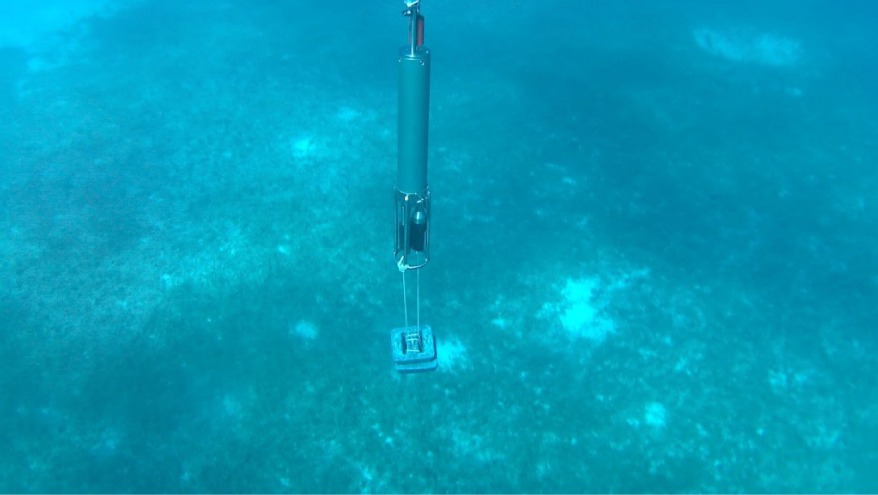
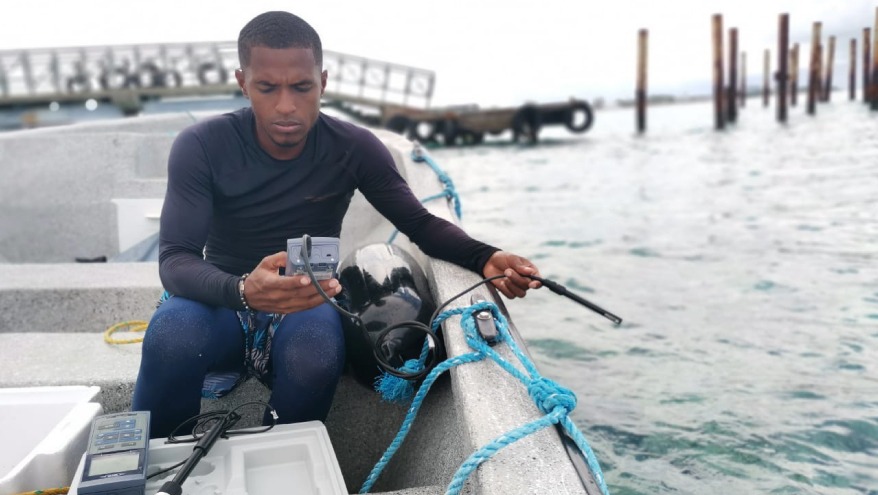
Photos taken by the CEMarin research team
These comprehensive monitoring efforts serve as the starting point for exploring innovative alternatives to address the archipelago’s environmental challenges, promoting both ecological and social resilience. Within these alternatives, NbS play a crucial role by offering benefits such as aquifer conservation through reduced overexploitation, preventing saltwater intrusion, protecting coastal ecosystems like mangroves, coral reefs, and seagrass beds, mitigating climate change effects on water availability, and fostering active community participation through awareness and environmental education, which ensure the long-term success of these projects.
NbS emerge as a key strategy for climate change adaptation and mitigation in insular territories like San Andrés. By leveraging ecological processes to tackle environmental challenges, they provide a promising alternative to exclusive reliance on traditional infrastructure. Continuous ecosystem monitoring and the development of sustainable technologies, such as desalination powered by renewable energy, reaffirm nature’s potential as an ally in balancing human development and environmental conservation, particularly in coastal areas highly vulnerable to climate change effects. The successful implementation of these solutions requires a collaborative approach involving various stakeholders, including government actors, scientists, and local communities. Initiatives like this, led by CORALINA, CEMarin, and different academic institutions, highlight the importance of integrating scientific knowledge with community management to ensure the long-term sustainability of these solutions.
From CEMarin, the project included the participation of Professor Juan David Osorio from the Universidad Nacional de Colombia, Caribbean campus, and Professor Jorge Herrera from the Universidad Jorge Tadeo Lozano, along with our co-researchers: Daniela Rosero, Carlos Henao, Juan González, Ariadna Domínguez, Farid Cortes, researcher Juan David Guzmán, and Professor Santiago Arango, in addition to the strong support of CORALINA’s co-researchers.


No Comments