


16 May Coexisting Amidst Wonder: Humpback Whales and Coastal Communities of the Colombian Pacific


Cover photo: Meetings within the framework of the “Community and Sustainable Whale Watching” project. | by: CEMarin team.
“Huge beasts,” “dolphins,” “fierce sperm whales”: this is how, in the past, the communities of the Gulf of Tribugá, on Colombia’s northern Pacific coast, referred to humpback whales. They are “beautiful and ugly,” like “a big thing,” “pretty but scary,” “a harmless fish” and have also “brought many people” and “tourism and economic development to the territory.” These communities have witnessed the recovery and multiplication of whale populations over several decades after global efforts to stop whaling1, turning them into key allies for the development of nature tourism in the region.
This form of tourism is based on sustainable use and aims to provide experiences that connect visitors with nature and biodiversity observation2. One of Colombia’s most significant nature tourism activities is whale watching3. Each year, from July to October, these marine giants travel from the Antarctic Peninsula to the Pacific waters of the Gulf of Tribugá to reproduce, give birth, and nurse their young. “Our Pacific is their motel, nursery, and delivery room; these whales are Colombian,” say community members. However, during their migration and short stay, they are vulnerable to numerous natural and human-made threats.
From tourism issues to a community-based biodiversity conservation initiative
Among the threats faced by marine mammals in Colombia, tourism is a significant concern (Avila et al., 2022), as irresponsible whale watching can negatively impact these creatures by increasing their energy expenditure, causing disorientation due to boat noise interference, or injuries from vessel collisions4.
The speed and improper distance at which boats approach whales are some of the most common irresponsible whale-watching practices. According to the Guide for Responsible Marine Mammal Watching, it is recommended to maintain a distance of at least 100 meters, approach at moderate speeds no greater than 18 km/h, and keep the engine running in neutral when observing whales. However, following these guidelines in the Colombian Pacific context is challenging due to the region’s unique social, economic, and environmental factors.
Community + Science: A co-creation project
The Community and Sustainable Whale Watching project, made up of an interdisciplinary team that brings together various institutions and stakeholders with long-standing involvement in the Nuquí region, from both scientific and environmental management perspectives—CEMarin, Fundación Macuáticos Colombia, Fundación R&E Ocean Community Conservation, and the Consejo Comunitario General de los Riscales—aims to understand the factors that complicate the implementation of responsible whale watching. By working closely with a local team, the project seeks to develop and implement measures that ensure not only the well-being of whales but also the social and economic well-being of the communities that coexist with them, all from a sustainability perspective.
According to the local community, it is evident that whale tourism, particularly whale watching, it can be a risk to these animals because “Tourists get upset when they can’t get a good view of the animal,” “This non-compliance[with responsible whale-watching guidelines] happens when we try to satisfy the tourists,” “Even though they are informed about the regulations, tourists are very insistent [on getting closer or even trying to swim with them].” To improve whale-watching practices, those involved in whale tourism participate in numerous training sessions before each season. However, this method has not been effective in ensuring compliance or promoting whale welfare. “Not everyone who goes out to sea has the same knowledge; I would like all of us to be trained in whale watching because everybody has different information: some say 50 meters, others 200 meters,” mentioned a resident of Coquí. Regarding these training sessions, a participant from Guachalito said that “Tourists should also be educated about responsible whale watching. Theymust also know the guidelines.”
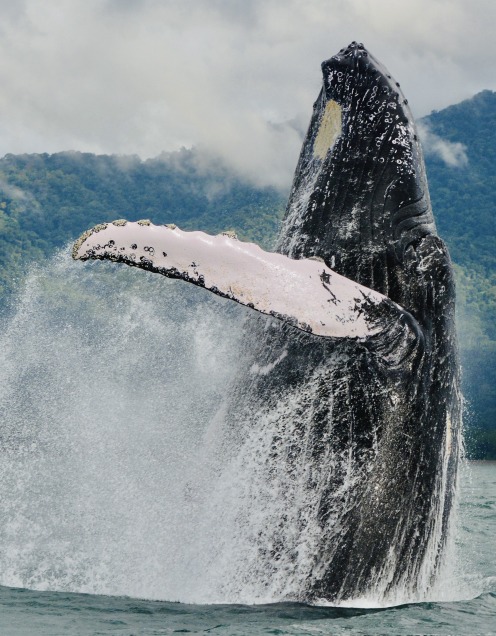
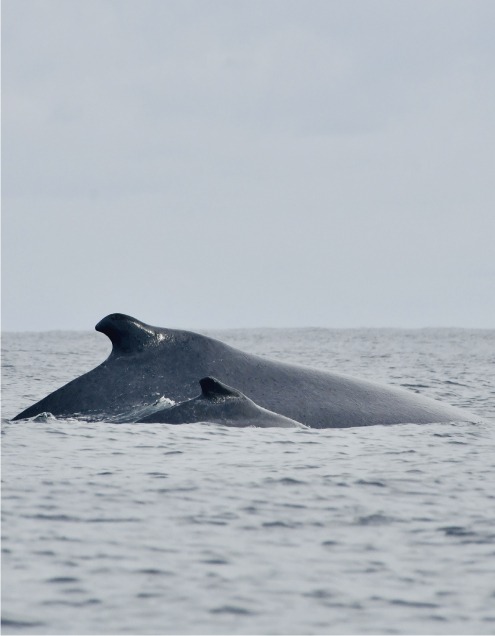
Photographs courtesy of Fundación Macuáticos Colombia
Tourist expectations for a successful whale-watching experience are often permeated by advertising, which frequently showcases whales jumping (see photo on the right), a natural behavior, but not necessarily common.
One way to moderate expectations is to inform visitors that a successful sighting may only observe a whale’s back (see photo on the left). Since these animals are in their natural habitat, their behavior is not controlled by humans.
Local efforts for care, organization, and collaboration
On the other hand, local operators recognize that enforcing responsible whale-watching recommendations is challenging due to the high level of informality in the activity: “«We don’t want to stay individually organized like we are now. We are going to come together, and as a group, we will have much more strength.” “I would really love to build a conservation network for whales. There must be a network, because this is where information will be shared, and the process begins. Without a network, everything is left adrift.” Additionally, achieving local compliance agreements is difficult due to the huge differences in the services each operator provides, making it harder to ensure fairness within the activity: “If I only have one customer, that person doesn’t report me […] Some operators have large boats, and their fuel costs are much higher,” explained one hotel owner and boat operator.
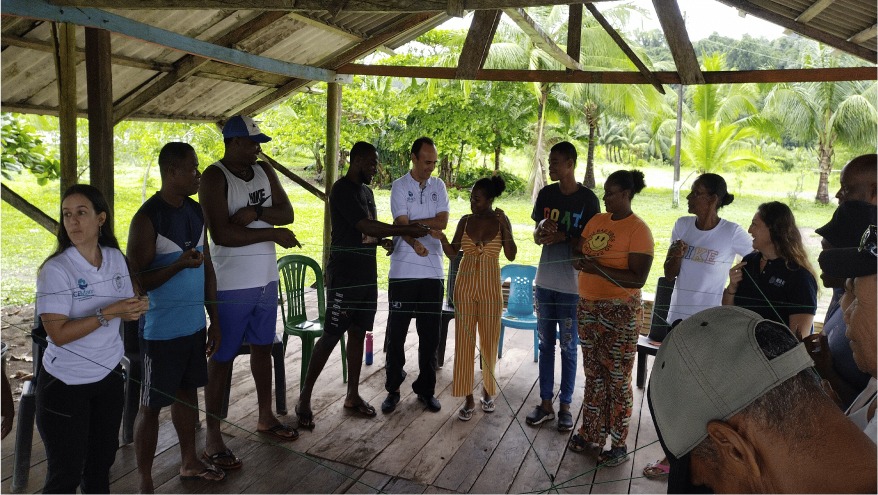
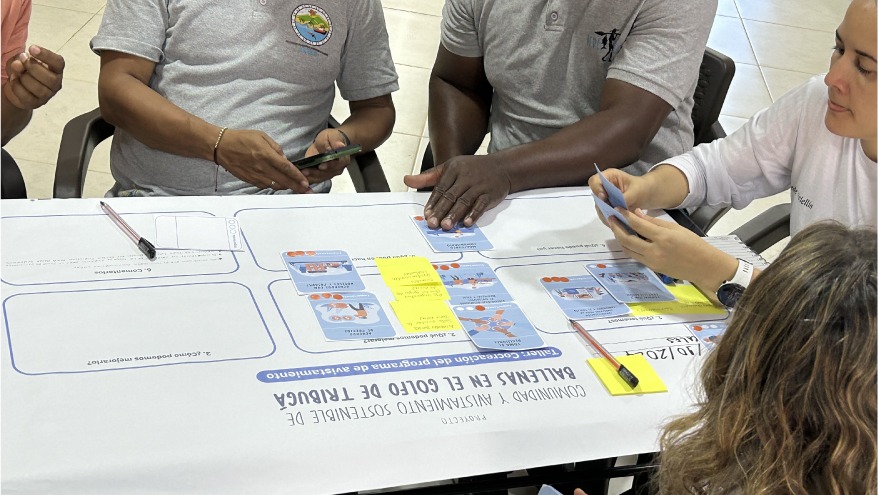
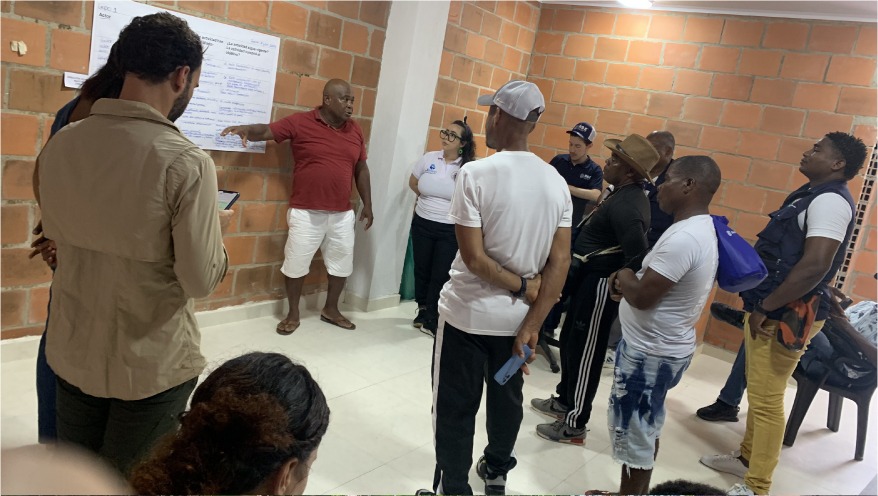
Meetings within the framework of the “Community and Sustainable Whale Watching” project in Nuquí and its surrounding communities. Photographs by the CEMarin team.
In this context, the Community and Sustainable Whale Watching project seeks to strengthen the organizational and technical capacities of People’s Sea (captains, boat operators, sailors, and guides) as well as their effective participation in decision-making processes. This will help develop a more inclusive and adaptive governance model that integrates environmental conservation, community development, and the sustainable use of natural heritage, preserving the delicate balance between humpback whales, their ecological interactions, and the coastal communities that share their ecosystem.
The great charisma of humpback whales has made them the region’s main tourist attraction, promoting whale-watching activities, but also increasing pressure on these marine mammals. Through the proposed program, indirect support will be provided to local initiatives aiming to improve social, economic, and environmental conditions in the territory while simultaneously managing whale watching. Nuquí, through its local leaders, it has the intention of promoting “365-day tourism” because the Gulf of Tribugá offers much more than just whales: “We have Cumbancha, Viche, canoe tours through the Arusí River, the Jurubirá hot springs, the Cuatro Encantos waterfall in Termales, the Pichindé River, the Tribugá mangroves,” and many other community tourism initiatives that encourage economic diversification and strengthen the region’s cultural heritage. Thus, we see that the collaboration between this proposal of the local community, the previous work of key organizations (such as Fundación Macuáticos and Fundación R&E), and the initiative emerging from this project has the potential to reduce pressure on these marine mammals through a co-creation process where community, science, NGOs, and government institutions all play an essential role.


No Comments