

16 May Nature-Based Solutions: A Transformative Approach to Coastal Resilience and Human Well-being


In a world deeply affected by the climate crisis, biodiversity loss, and increasing natural disasters, Nature-Based Solutions (NbS) emerge as a powerful, sustainable, and effective response to address the environmental, social, and economic challenges of the 21st century. NbS aim not only to conserve and restore ecosystems, but also promote the resilient development of human communities by strategically leveraging ecosystem services.
Latin America and the Caribbean, with more than 64,000 km of coastline and a quarter of the world’s mangroves, have an exceptional opportunity to lead the implementation of NbS. In this region, coastal areas are home to nearly half of the population, concentrate key economic activities, and hold deep cultural and ecological value. However, these areas also face growing risks due to phenomena such as coastal erosion, flooding, ocean acidification, and habitat loss, whose intensity and frequency are exacerbated by climate change.
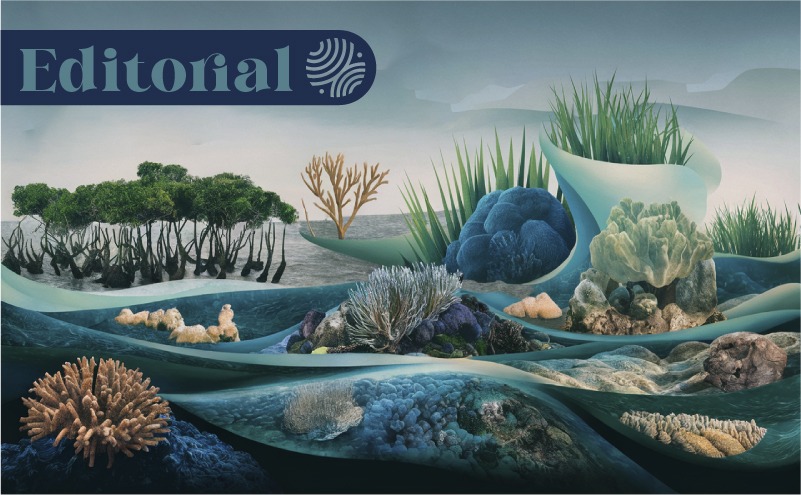
Against this backdrop, NbS emerge as an innovative, integrative, and cost-effective approach. Their purpose is to work with nature—not against it—to reduce vulnerabilities, increase resilience, and generate multiple benefits. These solutions include actions such as protecting intact ecosystems, sustainably managing intervened landscapes, and restoring degraded environments, including mangroves, seagrass meadows, and coral reefs.
One of the main virtues of NbS is their ability to provide integrated responses to multiple problems. For example, mangrove restoration not only reduces wave energy and mitigates the effects of sea-level rise, but also acts as a carbon sink, supports biodiversity, and sustains local livelihoods such as fishing. In many cases, these natural solutions have proven to be more effective and sustainable than traditional gray infrastructure like dikes or breakwaters, with lower maintenance costs and greater adaptability to changing conditions.
In this context, the conservation of coastal ecosystems also becomes a key climate mitigation strategy. According to the IPCC (2021), NbS could represent up to one third of the actions needed to achieve global carbon capture goals by 2030. This highlights the importance of expanding protected area networks and improving governance over coastal and marine landscapes. The creation of tools such as risk maps based on natural habitats, blue carbon models, and integrated coastal zone management plans are fundamental steps in translating science into effective public policies.
In Colombia, various projects presented in this special edition demonstrate the potential of NbS in practice. The sea4soCiety initiative promotes carbon sequestration in mangroves and seagrass meadows, while the sustainable desalination project in San Andrés, developed in collaboration with Coralina and the Universidad Nacional de Colombia, Caribbean campus, offers innovative alternatives for water supply in island regions. These experiences not only showcase technical solutions, but also ways to integrate local knowledge and community participation in environmental planning.
The social dimension of NbS is equally relevant. The protection of marine ecosystems directly impacts the well-being of coastal communities, improving their food security, access to clean water, and protection against extreme events. A clear example is whale-watching tourism, which combines biodiversity conservation with local economic development, fostering positive connections between people and nature.
However, for NbS to reach their full potential, structural challenges must be overcome. These include institutional fragmentation, the lack of high-resolution data, and the insufficiency of legal frameworks recognizing the value of ecosystem services. Integrated coastal zone management requires coordinated policies across sectors, sustained investments in science and technology, and effective multi-level governance mechanisms. As highlighted by international experiences such as the “Building with Nature” program in the Netherlands or “Living Shorelines” in the United States, the success of these solutions depends as much on scientific knowledge as on political and social commitment.
In this regard, the project for the development of Technical and Policy Recommendations, which was part of the European Union Climate Dialogues, represents an important step forward. Based on scientific evidence and local experiences, this document provides key guidelines to guide urban planning, the protection of strategic ecosystems, and the mobilization of financial resources. Initiatives like these help align local actions with global goals, such as the Sustainable Development Goals (SDGs) and the Paris Agreement.
The message is clear: investing in nature is investing in the future. NbS are not a marginal alternative but a central strategy for building resilience to climate change, protecting biodiversity, and ensuring decent livelihoods for millions of people. Moreover, they represent an opportunity to reimagine our relationship with ecosystems, shifting from an extractive logic to one of reciprocity and co-responsibility.
This special edition highlights that transformative potential. Through case studies, policy recommendations, and innovative experiences, it demonstrates that it is possible to move toward a fairer, more resilient development model in harmony with nature. We invite our readers to explore these contributions and join the collective effort to build a sustainable future from and with ecosystems.


No Comments