

07 Jun The Fight Against Macroplastic Pollution on the Coasts: A Call from the Colombian Pacific

Co-authors: Marta E. Quiñones-Grueso1, Hanna L. Bohórquez A.1, Kevin Bravo-Bolaño1, Elizabeth Carvajal-Flórez1, Natalia Andrea Cano Londoño3, Amanda L. Mora M.1, Luz S. Cadavid R.1, Juan A. Zornoza B.1, Andrés F. Osorio A.1,2, Carlos A. Zárate Y.1.
1. Universidad Nacional de Colombia, Colombia.
2. Corporation Center of Excellence in Marine Sciences – CEMarin.
3. Twente University, The Netherlands.
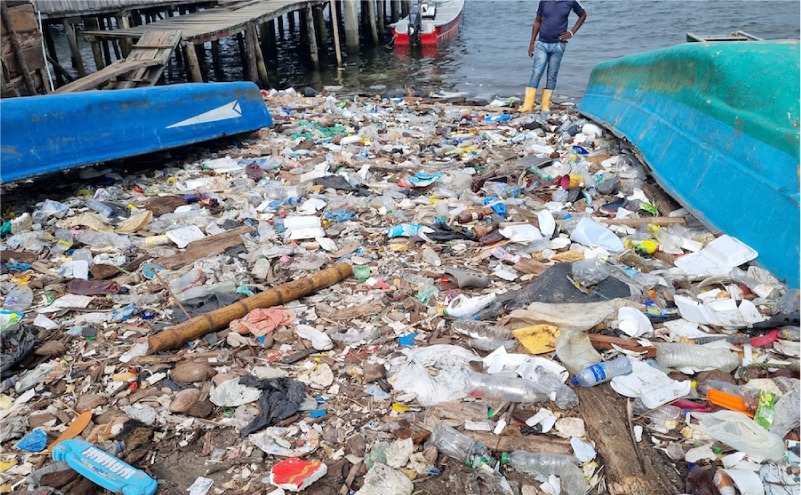
Cover photo: Beach polluted with macroplastics – San Andrés de Tumaco | by: Alejandro Ramírez
Plastic pollution has emerged as one of the most pressing environmental issues in recent decades, affecting biodiversity, ecosystem balance, and human health (Chowdhury et al., 2022; Thompson et al., 2009). San Andrés de Tumaco is a key district within the Eastern Tropical Pacific Marine Corridor (CMAR), which encompasses essential protected areas in Ecuador, Colombia, Panama, Costa Rica, and Mexico. In the coastal areas of this municipality, the situation is alarming. Plastics not only pollute the marine environment but also alter the landscape, degrade essential habitats, and significantly impact local communities that depend on these ecosystems for their livelihoods (Le et al., 2024).
In 2024, a strategic alliance of the Universidad Nacional de Colombia, comprising the Medellín, Palmira, and Tumaco campuses, aimed to assess the socio-economic and ecological impacts of macroplastic transport to the coasts of this marine-coastal district. The approach combined technical methodologies (Conesa Fernández, 2009) with the perceptions of local communities. Field visits and participatory workshops were conducted, where residents shared their perceptions and experiences regarding plastic pollution. Subsequently, a qualitative analysis of environmental impacts was carried out based on criteria defined in Figure 3, allowing for an assessment of the significance and nature of the effects.
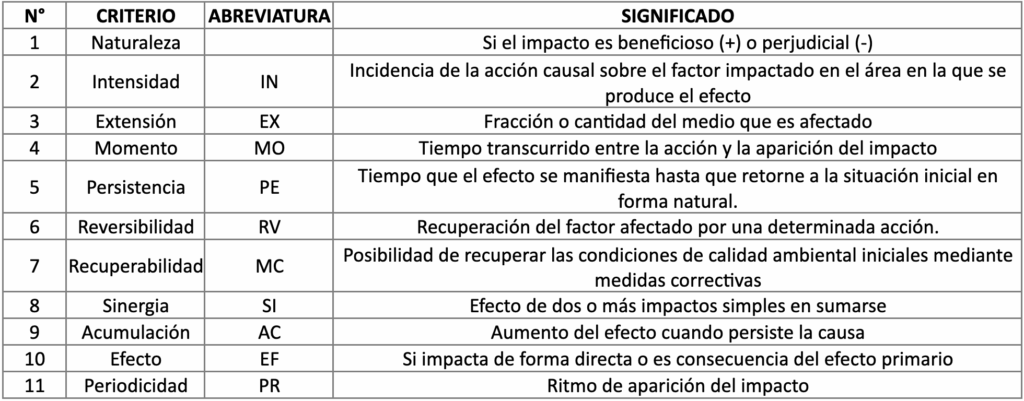
Figure 2. Criteria for qualitative environmental impact assessment. – Adapted from Conesa Fernández (2009).
According to Vicente Conesa’s “Methodological Guide for Environmental Impact Assessment,” the absolute importance of environmental impact is determined by the following equation:
I = ± [3*IN + 2*EX + MO + PE + RV + SI +AC + EF + PR + MC]
The results of this assessment revealed a concerning scenario. Of the identified impacts, one was classified as irrelevant (0 < I < 25), five as moderate (26 < I < 50), three as severe (51 < I < 75), and one as critical (I > 75). The most significant impacts include macroplastic accumulation and changes in soil structure, the accumulation of waste in the water column, and the loss of landscape quality.
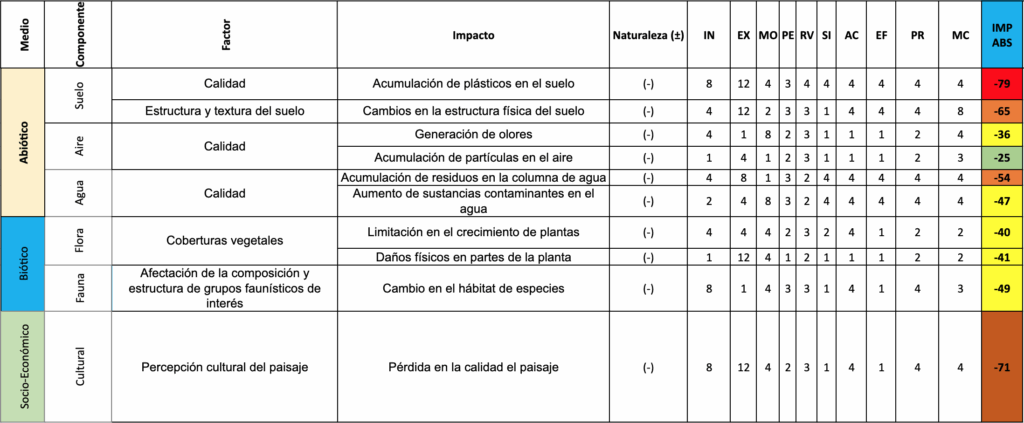
Figure 3. Environmental impact significance of macroplastics in Tumaco. – Original analysis based on Tumaco community perceptions.
These findings highlight the urgent need to establish effective strategies for plastic waste management to improve the environmental quality of the coasts and preserve the marine-coastal ecosystems of the district. Furthermore, it is crucial to develop a collaborative governance system involving various stakeholders at local, regional, national, and international levels, who are engaged in plastic waste management within their areas of influence. This is a complex process that integrates local, regional, national, and international cooperation efforts aimed at preserving marine-coastal areas while also ensuring the well-being, education, employment, and community’s food security.
The alliance proposes community-based solutions such as participatory environmental monitoring, the implementation of environmental education programs tailored to the territorial context, and the strengthening of community management of macroplastic waste. This study serves as a call to action, promoting integrative activities aligned with regional and local efforts. Only through effective collaboration between coastal and inland communities can this global challenge be addressed, ensuring the protection of marine-coastal ecosystems from the adverse impacts of plastic pollution. Let us not forget that “the sea begins at home.”


No Comments