

26 May Art as an Environmental Pedagogical Tool: Experiences from Education

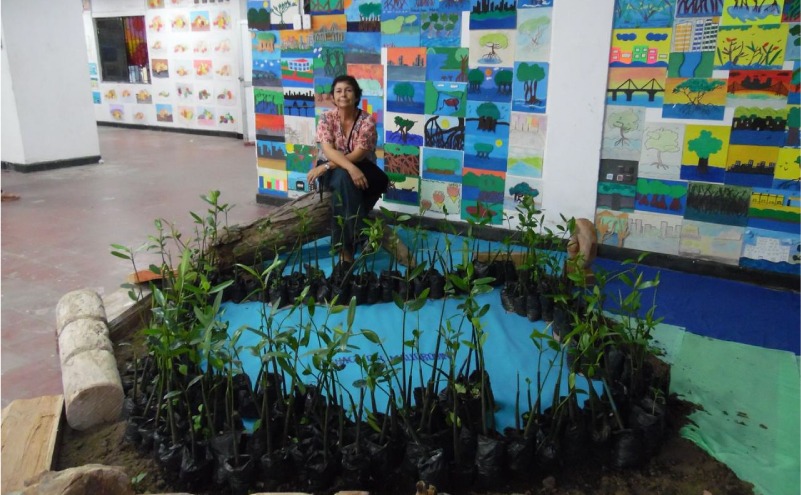
Cover photo: Student art exhibition on mangroves | by: Gloria Villa de Fernández
The relationship between art and nature has been a constant throughout human history. From the first pictorial manifestations in caves to modern expressions of environmental art, the natural environment has served as a source of inspiration and reflection. In this context, teaching art not only fosters creativity but also becomes a powerful tool for raising awareness and educating about the importance of ecosystem conservation.
Art is a key pedagogical tool for fostering appreciation and respect for nature. Through interdisciplinary activities and field trips to museums, galleries, and craft fairs, students not only develop their creative skills but also gain awareness of the importance of biodiversity and environmental conservation.
Art as a Conservation Strategy
In the educational field, integrating art with environmental protection has allowed me to create spaces for reflection on the importance of tropical dry forests, the recovery of native flora and fauna, and the preservation of aquatic ecosystems such as rivers and seas. At the Auxiliary Center for Teaching Services (CASD), I implemented this methodology with young people of different ages, promoting analysis and reflection on the significance of ecosystems. This initiative led to the reforestation campaign “Let’s Plant Trees, Let’s Plant Life, Let’s Plant Peace,” where students actively participated in tree planting in deforested areas, understanding the relevance of reforestation as a strategy to mitigate climate change and restore degraded ecosystems.
“Ma’ Mangle Pa’l Mallorquín”: Art and Reforestation
In 2008, together with the artistic collective “Las Ecocéntricas,” we launched the reforestation project “Ma’ Mangle Pa’l Mallorquín” to raise awareness among children from the small town of Eduardo Santos in the La Playa district about the ecological value of the Mallorquín Lagoon. This strategy aimed to involve the local community in conserving this vital ecosystem, which had been affected by deforestation and uncontrolled urbanization. Through ephemeral artistic interventions, performances, and playful activities, we created spaces for dialogue and learning about the importance of mangroves as natural barriers against coastal erosion and as biodiversity refuges. Collaboration with the San Vicente de Paúl District Educational Institution and Professor Myrian Fontalvo, a biologist from the Universidad del Atlántico, was essential in consolidating the project.
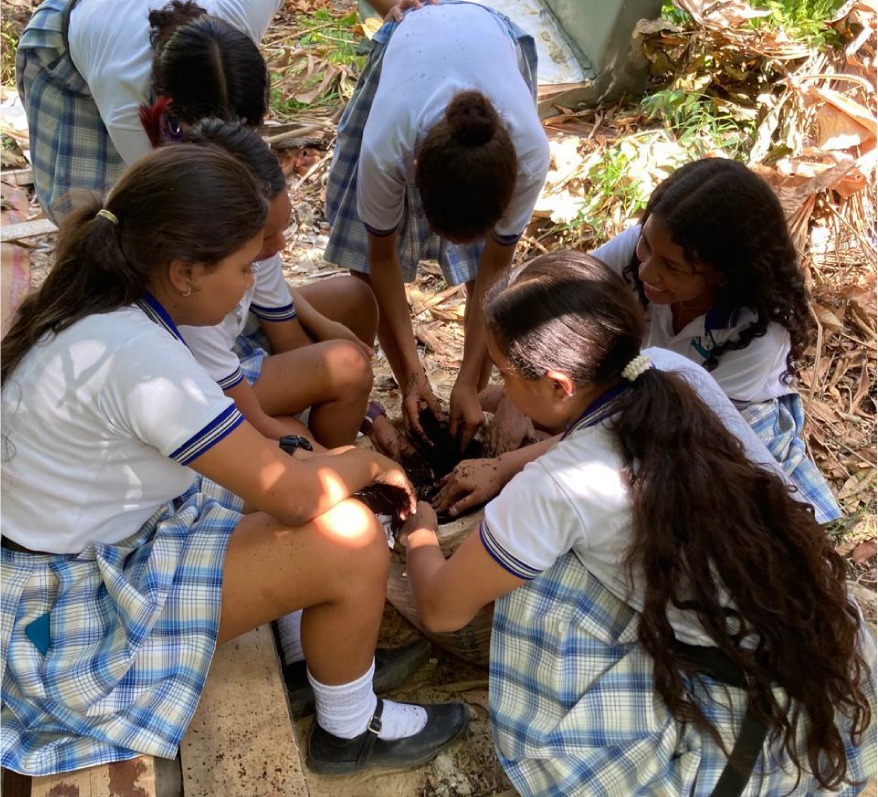
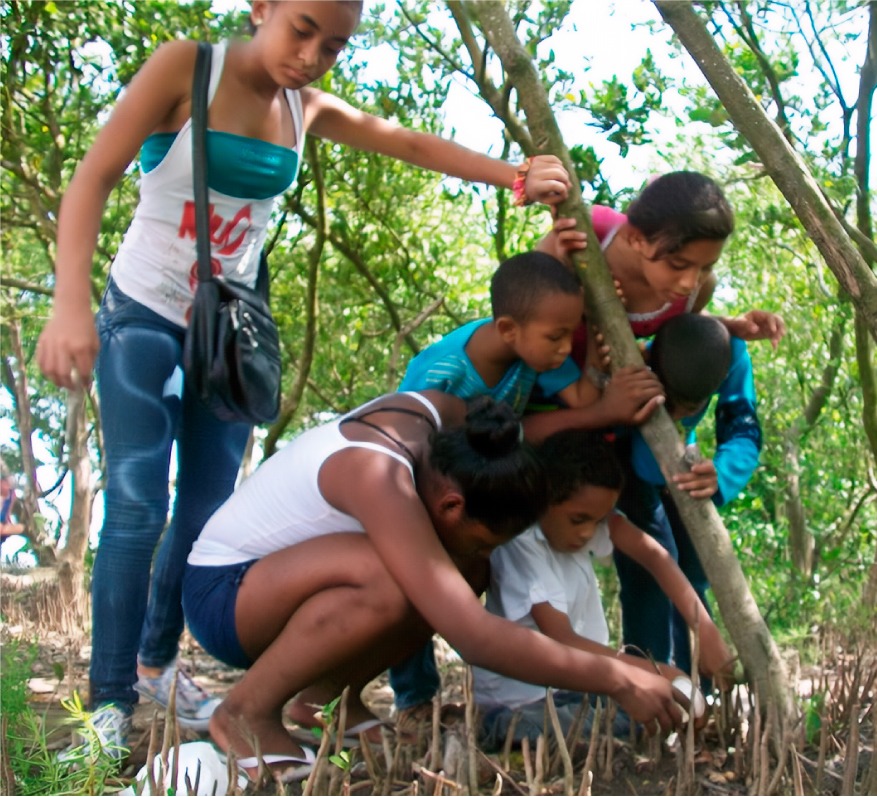
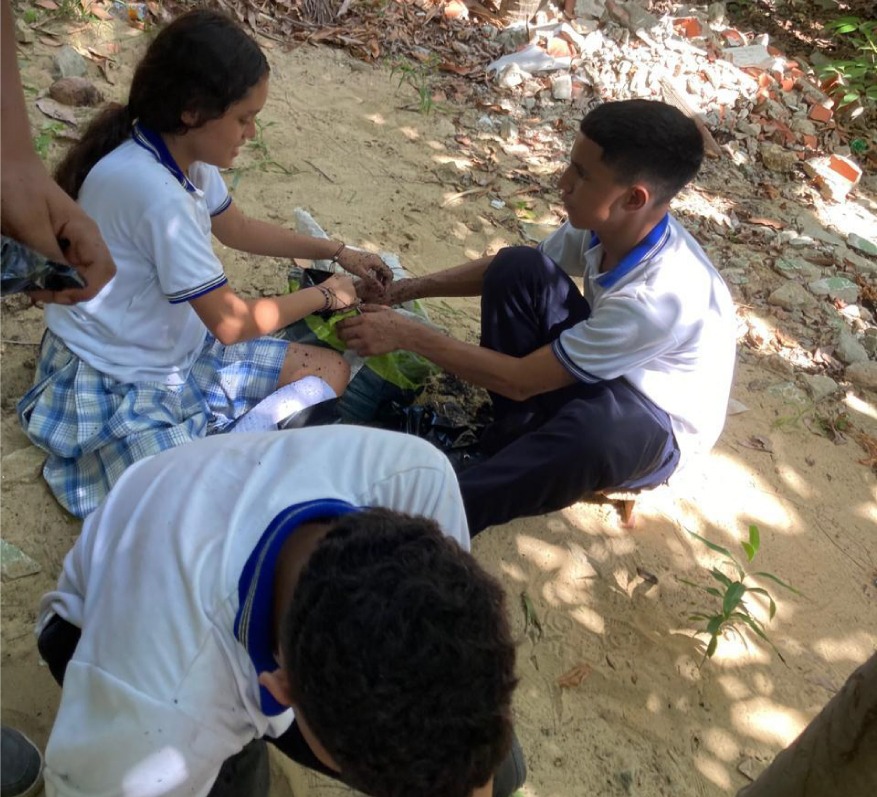
Photos by Gloria Villa de Fernández
The activities included:
– Creating a logbook to record the growth of the mangrove nursery.
– Preparing the land for planting.
– Germinating red mangrove seeds in bags filled with humus from the lagoon.
– Daily care and watering of seedlings for two months.
– Artistic installations related to the mangrove ecosystem.
– Transplanting seedlings to the lagoon.
Nature-Based Solutions and Education
Art, as a universal language, enables deep connections between individuals and their natural environment. Initiatives such as “Ma’ Mangle Pa’l Mallorquín” demonstrate that Nature-Based Solutions can go hand in hand with creativity and education to promote ecological restoration, encouraging active community participation in sustainable solutions.
In this regard, in the book Fiesta en el Manglar del Cangrejo Azul (2022), I share over three decades of experience in educational and environmental work, proposing an interdisciplinary approach that combines art, education, and environmental conservation. The book highlights how artistic awareness can serve as a starting point for developing ecological restoration strategies from both communities and classrooms at an early age. Through illustrated stories and pedagogical activities, the book invites readers to understand the importance of biodiversity and the need to protect coastal ecosystems, emphasizing teaching in classrooms as a fundamental means of fostering behavioral change and more sustainable attitudes towards the environment.
Modern pedagogy, through art education and interdisciplinarity, can serve as an opportune tool to instill respect and appreciation for nature, species conservation, and life from childhood. Education has the obligation to convey that protecting, caring for, and preserving nature is everyone’s responsibility, as it forms the foundation where people live, develop, and achieve fulfillment.


No Comments