


25 May Green Strategies for Blue Ecosystems: A Community-Based Approach from the Pacific

Cover photo: The Colombian Pacific welcomes us | by: Daniel Felipe Bernal Glen
Amid the lush rainforests and rich biodiversity of Colombia’s Pacific coast, a group of 25 individuals from diverse countries, professions, and backgrounds discovered a treasure even more valuable: the organizational strength and resilience of the communities inhabiting these ecosystems. From the piangüeras (mollusk harvesters) of Bahía Málaga to the “Walking Beach” of Punta Soldado, the course Green Strategies for Blue Ecosystems, organized by CEMarin, allowed us to spend four days with community leaders deeply committed to preserving their traditions—driven by the unwavering belief that coexisting with nature and protecting ecosystems are pillars of a sustainable way of life.
In the mangroves near La Plata, Bahía Málaga, a group of women wades into the ecosystem carrying buckets, traps, PVC tubes, and gloves—essential tools for harvesting piangua (Anadara tuberculosa), a practice that demands long hours among the mangrove roots. Each piangüera can collect up to twelve dozen (their preferred unit of measure) of these mollusks, which are vital for their community’s food security and cultural heritage. Yet, sustaining this tradition has not been easy. Pressure from loggers and unsustainable harvesting threatens the mangroves’ delicate balance, prompting communities like La Plata to organize and self-regulate. They have established their own harvesting quotas, seasonal bans, and monitoring programs: only specific plots are harvested at any time, and only mollusks larger than five centimeters are collected. During our visit, we joined the piangüeras in the mangroves, witnessing how tradition and science converge in this space, reinforcing a connection to the land—physically, economically, and academically, but also emotionally and spiritually.
Across the bay in Punta Soldado, the community faces a different challenge: a coastline in constant flux. The encroaching sea threatens homes and livelihoods, yet instead of retreating, the residents have redefined their reality.
This gave birth to “The Walking Beach”, a tourism initiative born from a profound understanding of the land and an adaptation of the rhythms of life to natural cycles.
Through mangrove restoration efforts, the community has learned to manage their environment, pioneering innovative solutions like floating mangrove nurseries—a local invention with potential for replication in other projects.
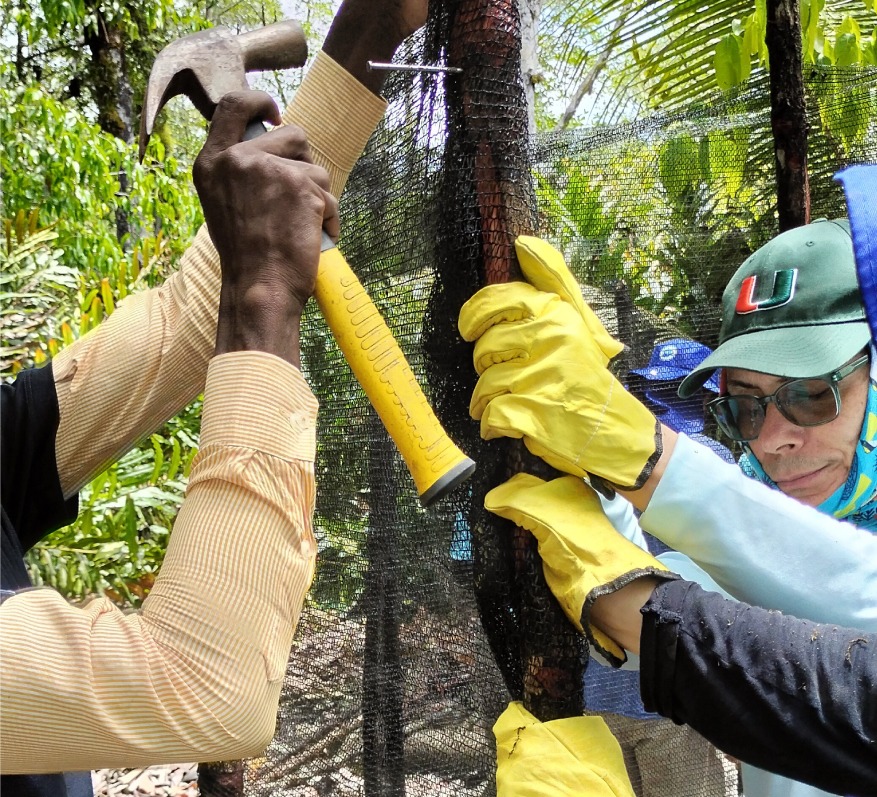
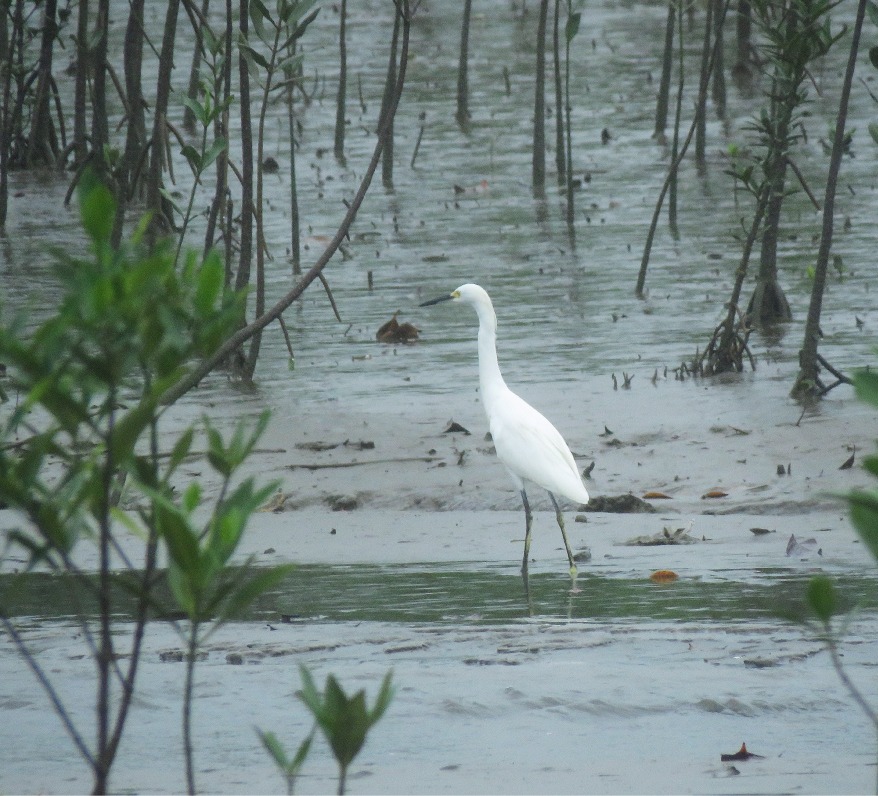
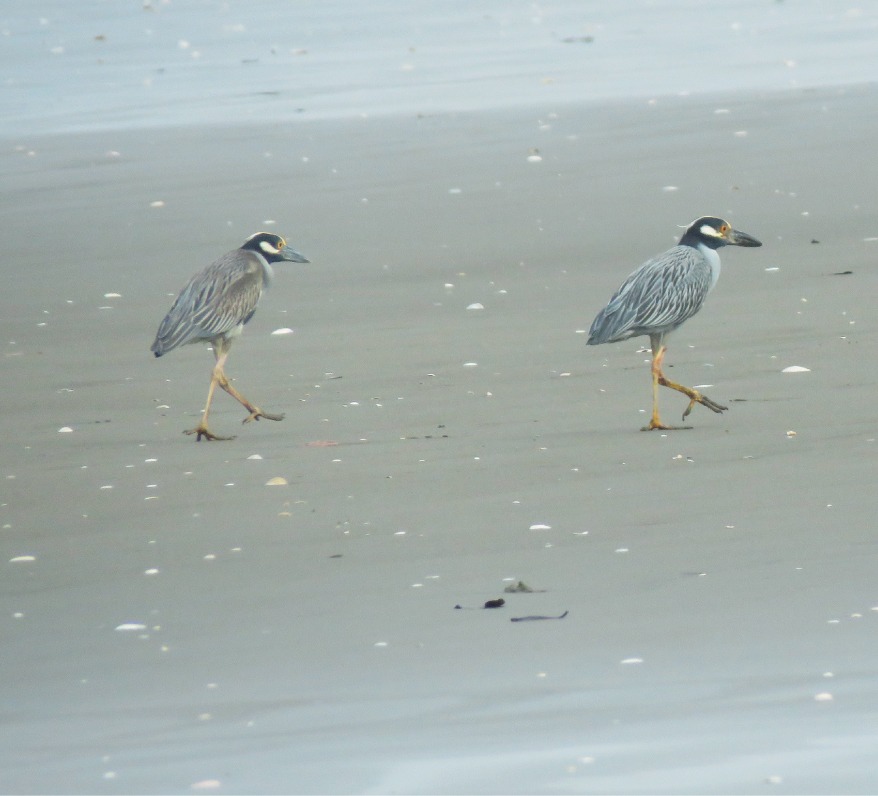
Building nurseries for mangrove restoration and birdwatching at “The Walking Beach.” Punta Soldado Community.
Collaboration between scientists and the community has been key to revaluing local biodiversity. Species that were always present but absent from traditional practices—such as migratory birds and whales—have now found a place in the collective imagination. Today, a new generation of leaders respects and learns from these species, and much of the community is eager to share their land’s potential with open-minded visitors. Of course, transmitting this knowledge across cultures and languages is no simple task, and the rise of tourism brings new challenges. Still, the enthusiasm of these leaders leaves room for optimism.
A fisherman from the Caribbean plains once told the scholar Orlando Fals Borda: ``We act with our hearts, but we also use our heads—and when we combine the two, we become ‘sentipensantes’ (feeling-thinking beings).``
Here, hundreds of kilometers from that encounter, on Colombia’s Pacific coast, our group experienced that same philosophy first hand. We returned to the city enriched by this journey, convinced that sustainable alternatives exist. The communities of La Plata and Punta Soldado will remain in our hearts and memories, leaving us with deep gratitude and admiration. Through their tireless work, they’ve shown us that it’s possible to challenge traditional notions of “progress”—which long ignored nature—and that we already have the tools to address society’s most pressing needs without sacrificing our ecosystems. They’ve proven that sustainable models exist where communities and ecosystems thrive as one inseparable whole.


No Comments