

09 Jun Green Strategies for Blue Ecosystems: Inspiring NOUS Ecossistema

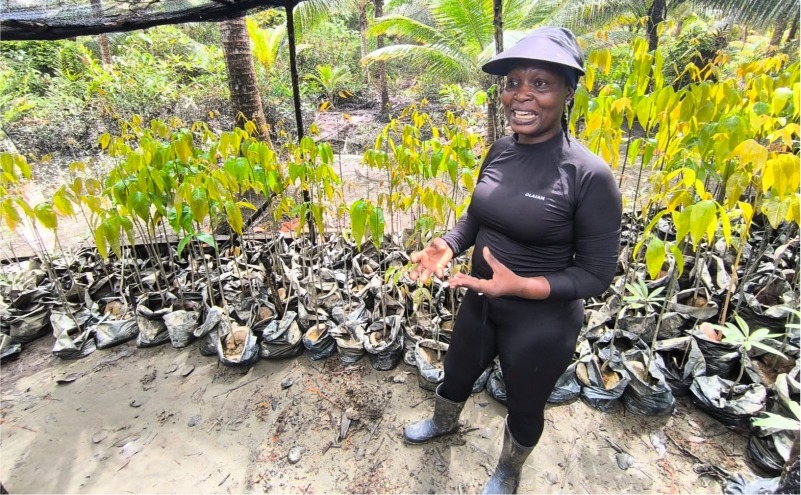
Cover photo: Female leader from Punta Soldado | by: Rosana Rezende
NOUS Ecossistema comprises three interconnected pillars: design, research, and inspiration. These pillars form a holistic framework that integrates creative thinking, scientific exploration, and cultural dissemination to drive meaningful change.
The design pillar fosters conscious and innovative communication that highlights uniqueness and connections with nature. It empowers individuals, projects, and brands through regenerative thinking and design. Through consultancy services, we aim to drive and accelerate change, inspire empathetic businesses, and guide teams in collaborative processes, among other initiatives. By embracing nature as a model, mentor and measure, we develop solutions that are not only innovative but also sustainable and impactful.
The research pillar focuses on fostering new reflections and actions at the intersection of art, design, and nature, emphasizing the development of creative and innovative solutions at both national and international levels. Nous Ecossistema achieves this through partnerships as a core practice, revisiting paradigms by integrating and facilitating dialogue among these three domains. Our goals are realized through direct project execution, structured programs, or action plans; the provision of physical, human, and financial resources; or intermediary support services for other non-profit organizations, as well as public and private sector entities working in related fields.
The inspiration pillar is dedicated to disseminating creative culture through educational initiatives that merge art, design, and nature. It aims to ignite individuals’ creative potential through knowledge and experimentation. We believe in the power of human creativity and operate as a movement that inspires transformative mindsets, contributing positively to both the planet and its people. By prioritizing the essence and uniqueness of each project or initiative, we aim to collaboratively build a better world. Our work embraces gradual, solid, and enduring (r)evolutions.
Reflections on the Green Strategies for Blue Ecosystems Course
The “Green Strategies for Blue Ecosystems” course was inspiring on multiple levels. Rosana Rezende was particularly struck by the researchers’ ability to bring scientific knowledge into practical contexts before and during community-led activities. CEMarin’s attentive approach and commitment to working closely with communities underscore the value of traditional knowledge. Observing the mangrove protection and restoration processes through community experimentation was an exceptional experience.
The course highlighted the importance of improving how we co-create these experiences with traditional populations and communities.
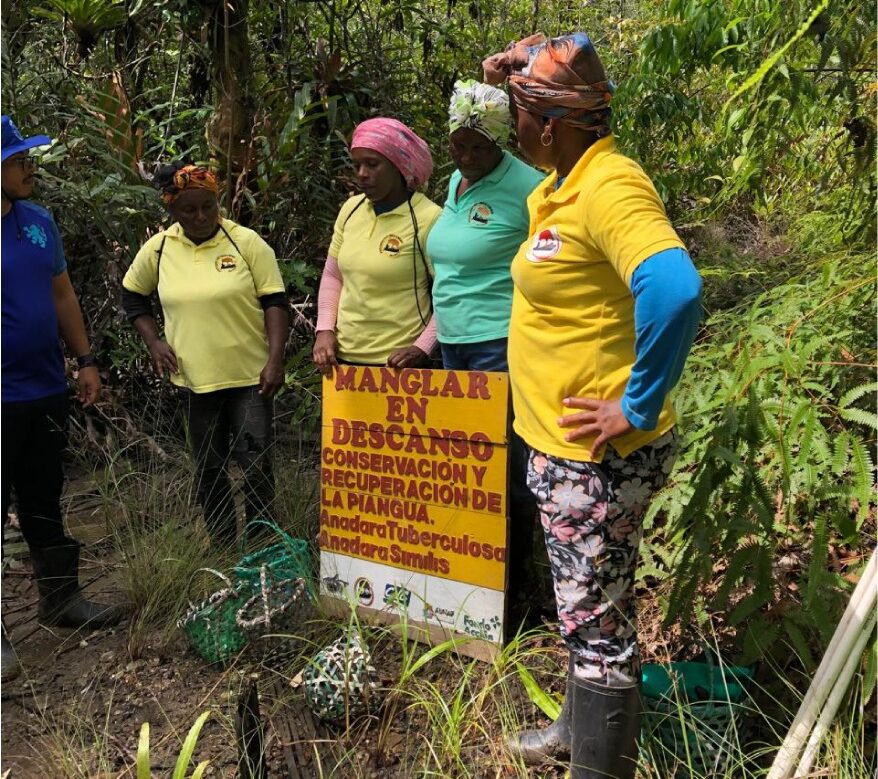
Female leaders from Bahia Malaga | by: Rosana Rezende
Nous Ecosystem has developed the concept of Bio-Thinking to help individuals navigate the realm of sustainability and regeneration. This methodology provides tools to observe and implement nature-inspired solutions for businesses, products, and services. At its core, Bio-Thinking is a gathering of people eager to integrate nature into their lives and projects. Our mission is to cultivate awareness and understanding of the world, enabling individuals to recognise their social roles.
Currently, we are designing training programs based on Nature-Based Solutions inspired by Brazilian biomes, particularly the Cerrado and Caatinga, which are less studied yet highly threatened. We are also considering the Amazon and Atlantic Forest biomes.
Looking Ahead
The knowledge gained from the pre-COP16 course will inspire how we approach nature-based and nature-inspired solutions moving forward. Our goal is to act as facilitators, empowering communities to make their discoveries and shaping each course into a journey that broadens thinking and action—whether in community engagement or training those who interact with such communities.
We aim to establish ethical and aesthetic models that drive a creative revolution. However, these processes can emerge from the traditional knowledge of communities living closer harmoniously with life. While we seek to educate perspectives, it is vital to acknowledge that the first perspective to change must be that of those seeking to drive transformation.
Thus, I extend my profound gratitude to CEMarin for enabling me to bring this renewed perspective to the Nous Ecosystem.


No Comments